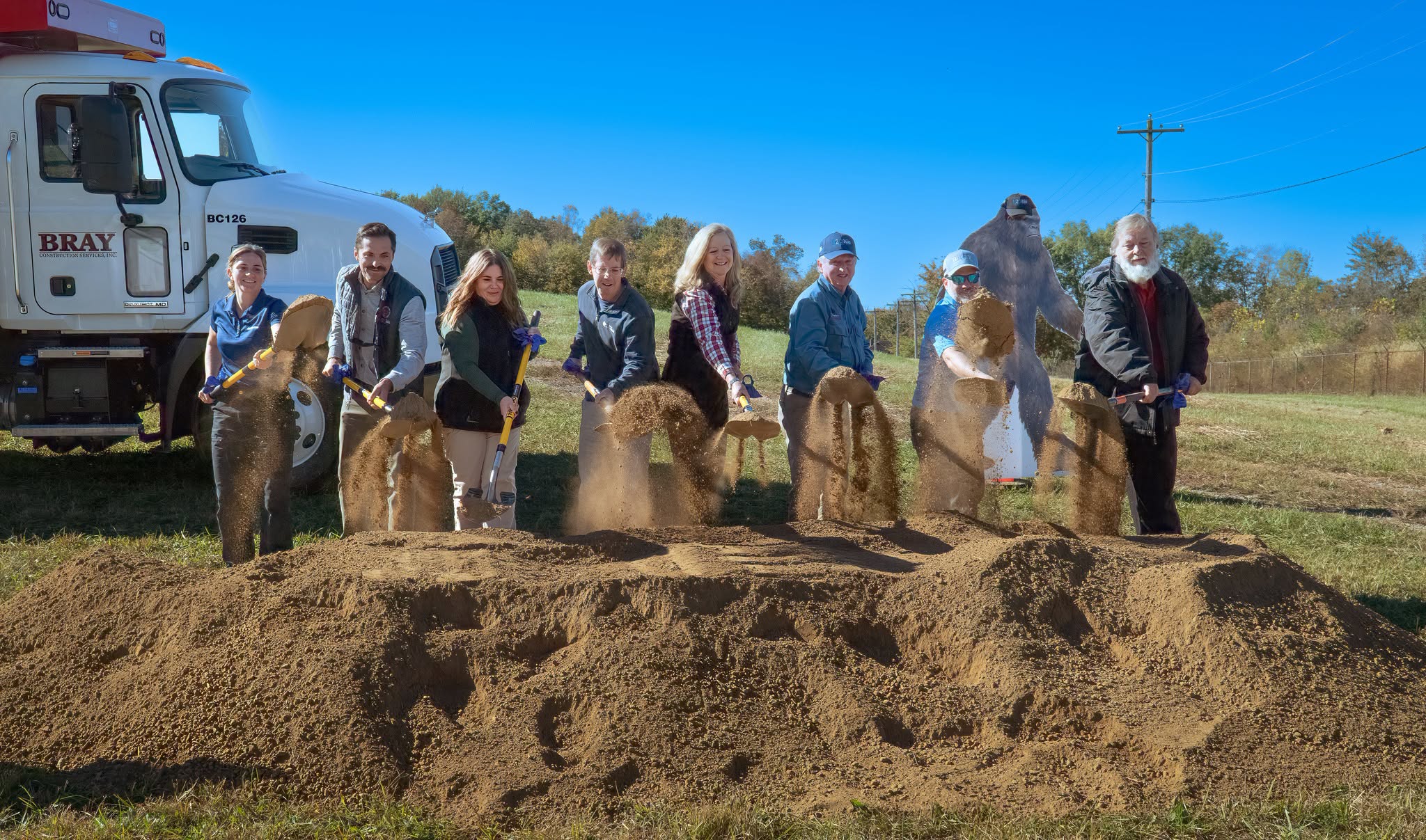

Planning is underway for the Cloverlick Creek project! The Village of Bethel is partnering with Clermont Soil & Water and the Ohio Department of Natural Resources (ODNR)-Division of Wildlife (DOW) to remove the low-head dam and restore Cloverlick Creek. The dam was built in the 1940s to provide a local water source for the village. The village stopped producing drinking water in the early 2000s and the dam currently serves no purpose. Low-head dams present significant public safety hazards and are often referred to as “drowning machines.” Dams also degrade stream habitat and health by disrupting the natural flow of water, blocking the migration of fish and other species. The segment of Cloverlick Creek upstream of the dam has been deemed impaired by Ohio EPA. Removal of the dam will improve public safety and help the stream recover to meet state water quality standards.
Bray Construction and Verdantas Engineering are the design-build team leading the project. Construction activities are slated to begin this fall and the project should be substantially complete by October 2027.
Cincinnati Enquirer: Historic Clermont County dam to be removed after 85 years
Clermont Co. is removing its largest lowhead dam to improve safety, stream health


Frequently Asked Questions:
The dam is located in the East Fork Little Miami River watershed on Cloverlick Creek, the second largest tributary to William H. Harsha Reservoir (US Army Core of Engineers).
The Village of Bethel owns the dam and adjoining property.
- The Village of Bethel
- Clermont Soil & Water provides assistance to communities for local watershed initiatives. Clermont Soil & Water is managing the project on behalf of the village.
- Ohio Department of Natural Resources (ODNR) Division of Wildlife (DOW) is a watershed partner and is providing project management assistance
Public safety is the primary reason for removing dams. Non-operational low-head dams are public safety hazards and have been dubbed “drowning machines.” Clermont County has an unfortunate history in this regard with two fatalities having occurred at the former Williamsburg Dam (removed in 2018) during the 1970s.
Public safety is an immediate benefit following removal. River restoration and improved stream health is another benefit. Similar to other streams with low-heads, Cloverlick Creek is impaired as it is not meeting state water quality standards due to declining measurements of the fish community. Low-head dams disrupt the natural flow of water, preventing the essential migration of fish and other species throughout the stream system.
Low-head dams create unnatural, pond-like conditions behind the structure. The stream becomes impounded with stagnate water that traps sediment, nutrients and heat. The stagnate water leads to algal blooms and the stream bottom is heavily impacted by siltation. Poor water quality and degraded habitat are harmful to fish, which is why Cloverlick Creek has a declining fish community. These conditions are equally harmful to mussels, macroinvertebrates and other aquatic species. Removing the dam will restore Cloverlick Creek to a more natural state, reminiscent of its historical condition before the dam was constructed.
The dam was built in the 1940s and funded through the Works Progress Administration (WPA) during the Great Depression to expand public infrastructure and strengthen community resiliency.
This project is a priority for the village as it eliminates a significant public safety hazard. Many people recreate near the Cloverlick Dam and are unaware of the potential harms it presents. Removing the dam and associated infrastructure will improve public safety and reduce the village’s legal and financial liabilities/costs.
This project is a priority for local watershed partners because Cloverlick Creek is included on Ohio EPA’s list of impaired streams (EPA’s Total Maximum Daily Load (TMDL) – East Fork Little Miami River Watershed). Impaired streams are a higher priority for certain state and federal funding programs (more information on TMDLs and the Clean Water Act can be found on EPA’s website). Over time, the fish community within Cloverlick Creek is expected to recover once the dam is removed. The village’s voluntary action to remove the dam is an excellent demonstration of responsible watershed stewardship.
This project is funded through the programs/grants listed below. The ODNR H2Ohio-Rivers Program provided a significant financial contribution that helped partners leverage additional funding.
- ODNR H2Ohio Rivers
- National Fish & Wildlife Foundation
- Clean Ohio Green Space Program
- U.S. Fish & Wildlife Service
Initial site preparation will begin in late 2026. The dam will be notched over a period of several weeks to allow for the controlled release of water in the impoundment. Full demolition of the dam and in-stream restoration will occur through 2027. The project should be substantially complete by fall 2027.
For more information, please contact Clermont Soil & Water.